8 Of The Best Core Exercises For Athletes
As an athlete looking to train your core, you may immediately think about exercises that can give you a six-pack. But true athletic core training goes beyond crunches or getting that desired six-pack look.
The best core exercises for athletes like you are going to focus on stability, rotation control, power transfer, and full-body coordination. A strong core helps all athletes run faster, lift heavier, change direction safely, and reduce injury risk, no matter the sport you play.
Whether you’re a competitive athlete or simply want to train like one, these exercises can help you build real, functional core strength.
Key Takeaways
Athletes should train the entire core, including the abs, obliques, lower back, and deep stabilizing muscles
Exercises like hanging leg raises, planks, carries, and rotational throws build functional strength
Core training improves balance, power transfer, and overall sport performance
Strong core muscles help reduce injury risk and support safer lifting and movement patterns
Consistent training two to four times per week leads to better long-term results
Dynamic and stability-based movements are more effective for athletes than traditional crunch-only routines
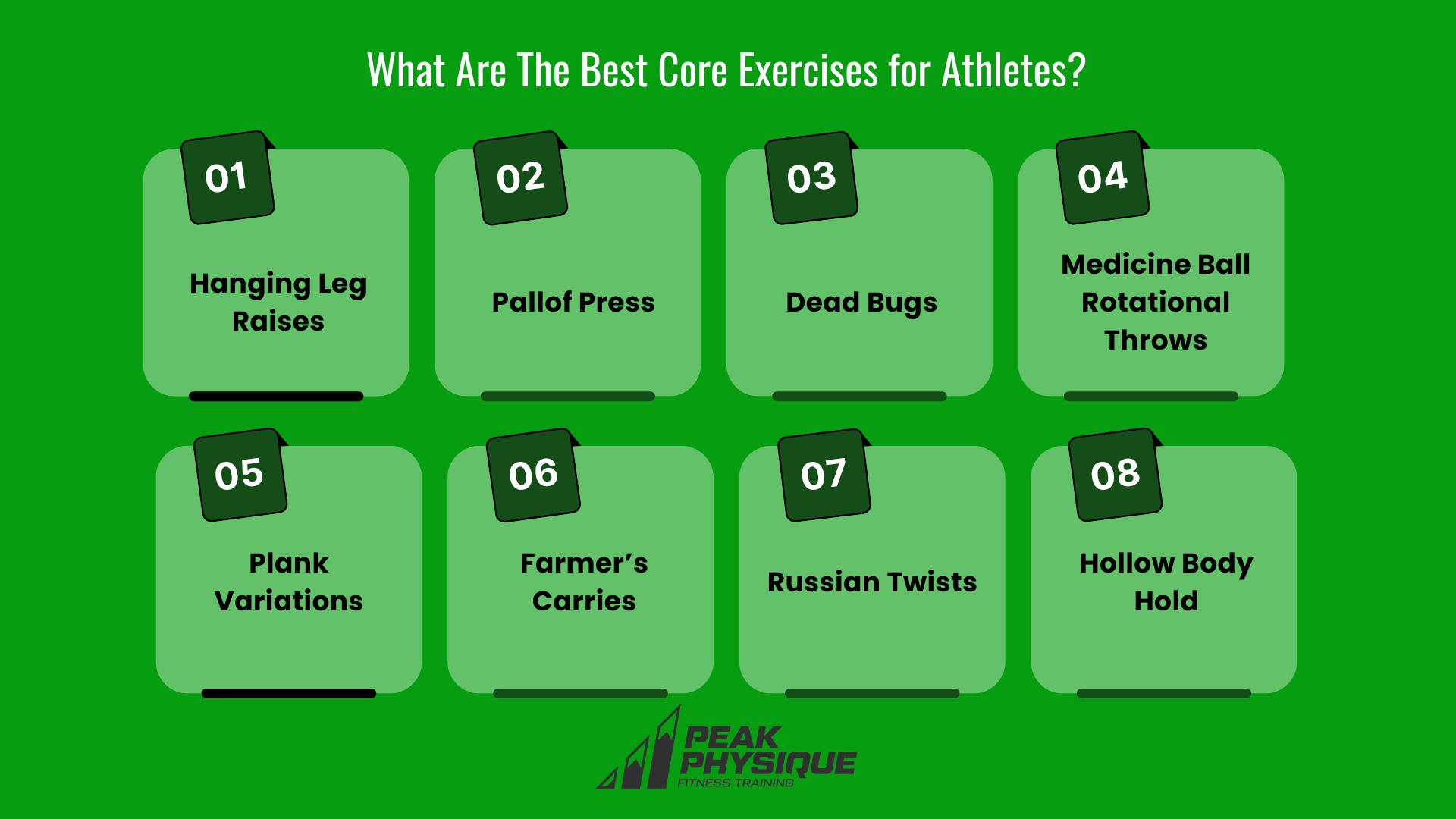
What Are The Best Core Exercises for Athletes?
We get it, athletes want to strengthen their core no matter what sport you play, and it’s hard to keep finding new and engaging ways to strengthen your core. So, let’s get into some of the best core exercises that any athlete can benefit from.
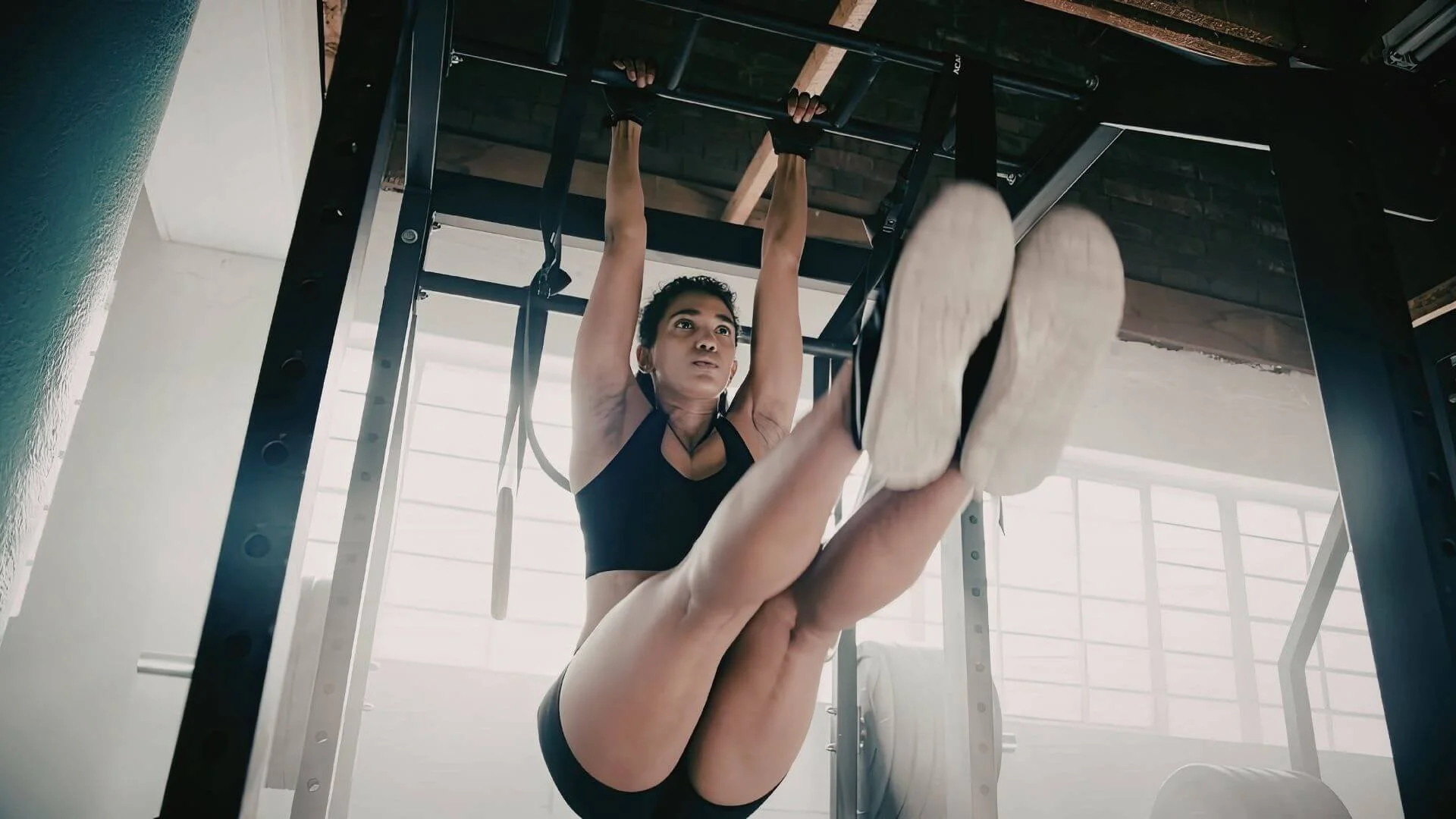
1. Hanging Leg Raises
Hanging leg raises are one of the most best core exercises for athletes because they challenge the lower abs, hip flexors, grip strength, and shoulder stability all at once.
This movement builds core control while your body is in motion, something athletes constantly experience during sport.
How to do it:
Hang from a sturdy pull-up bar with arms fully extended
Keep your core tight and avoid swinging
Raise your legs until they reach at least hip height
Slowly lower back down
Why athletes benefit:
Improves body control
Builds anti-swing stability
Strengthens lower core muscles
2. Pallof Press
The Pallof press is one of the best anti-rotation exercises athletes can use to build core stability.
Athletes constantly resist unwanted movement during cutting, sprinting, and contact situations. This exercise trains the body to stay strong and controlled under force.
How to do it:
Attach a resistance band or cable that you feel comfortable holding to a sturdy anchor point at chest height
Stand with the anchor point to your side and hold the handles of your band against your chest
Push the handle straight out and away from your chest, focusing on keeping your arms level
Hold briefly before returning
Why athletes benefit:
Improves rotational control
Protects the spine during explosive movements
Enhances balance and posture
3. Dead Bugs
Dead bugs may look simple, but they are incredibly effective for teaching core coordination and spinal stability.
This exercise trains athletes to maintain a neutral spine while the limbs move, a critical skill for running, jumping, and lifting.
How to do it:
Lie on your back with arms and legs raised
Slowly extend the opposite arm and leg
Keep your lower back pressed into the floor
Return and switch sides
Why athletes benefit:
Builds deep core stability
Improves movement efficiency
Reduces lower back strain
4. Medicine Ball Rotational Throws
Athletes generate power through the core. Rotational throws are one of the best ways to train explosive trunk strength.
This movement directly transfers to sports like baseball, tennis, hockey, golf, and even sprinting.
How to do it:
Stand sideways to a wall
Rotate your torso and throw the ball explosively
Catch or retrieve and repeat
You can also do this with a friend for some shared personal training. Instead of throwing at the wall, throw to your exercise partner, and catch when they throw to you.
Why athletes benefit:
Develops rotational power
Improves force transfer
Builds sport-specific strength

5. Plank Variations
Traditional planks are useful, but athletes benefit most from dynamic plank variations that challenge stability.
Examples include shoulder taps, plank pull-throughs, or plank reaches.
How to do it (shoulder tap example):
Start in a high plank
Tap one shoulder with the opposite hand
Keep hips stable and core tight
Why athletes benefit:
Builds anti-rotation strength
Improves shoulder stability
Enhances full-body control
6. Farmer’s Carries
Farmer’s carries are one of the most underrated core exercises for athletes.
While they may seem like a grip or leg exercise, they require constant trunk engagement to maintain posture and balance.
How to do it:
Hold heavy dumbbells or kettlebells
Walk slowly with a tall posture
Keep your core braced
Why athletes benefit:
Builds real-world core strength
Improves posture under load
Enhances endurance and stability
7. Russian Twists (Controlled)
When performed with proper control, Russian twists can help athletes develop rotational endurance.
The key is avoiding speed and focusing on tension and control.
How to do it:
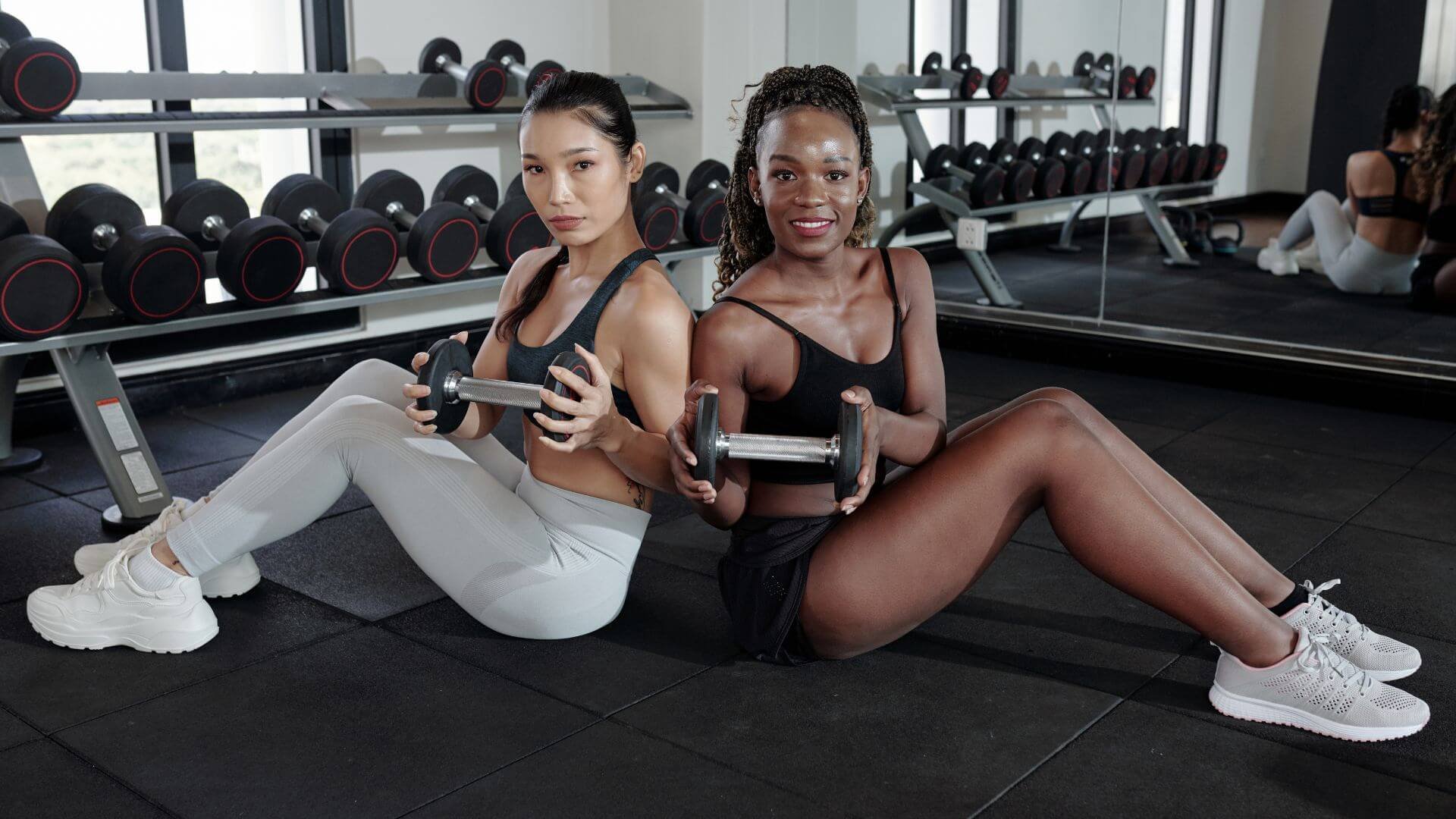
Sit down on the floor and keep your knees bent and feet flat or slightly elevated
Lean your torso backwards slightly while keeping your chest tall and core engaged
Hold a medicine ball, weight, or clasp your hands together in front of your chest
Slowly rotate your torso to one side, then the other, keeping the movement controlled
Avoid rushing through reps, focus on maintaining tension through your core
This is another exercise you can do with a friend. Just sit back-to-back and pass the medicine ball back and forth to each other.
Why athletes benefit:
Builds oblique strength
Improves rotational awareness
Supports change-of-direction performance
8. Hollow Body Hold
This gymnastics-based movement is one of the best ways to train total core tension.
Athletes learn to create stiffness through the trunk, which is essential for sprinting, jumping, and lifting.
How to do it:
Lie on your back
Lift shoulders and legs slightly off the floor
Keep your lower back pressed down
Hold position
Why athletes benefit:
Improves body tension
Builds endurance in deep core muscles
Enhances movement efficiency
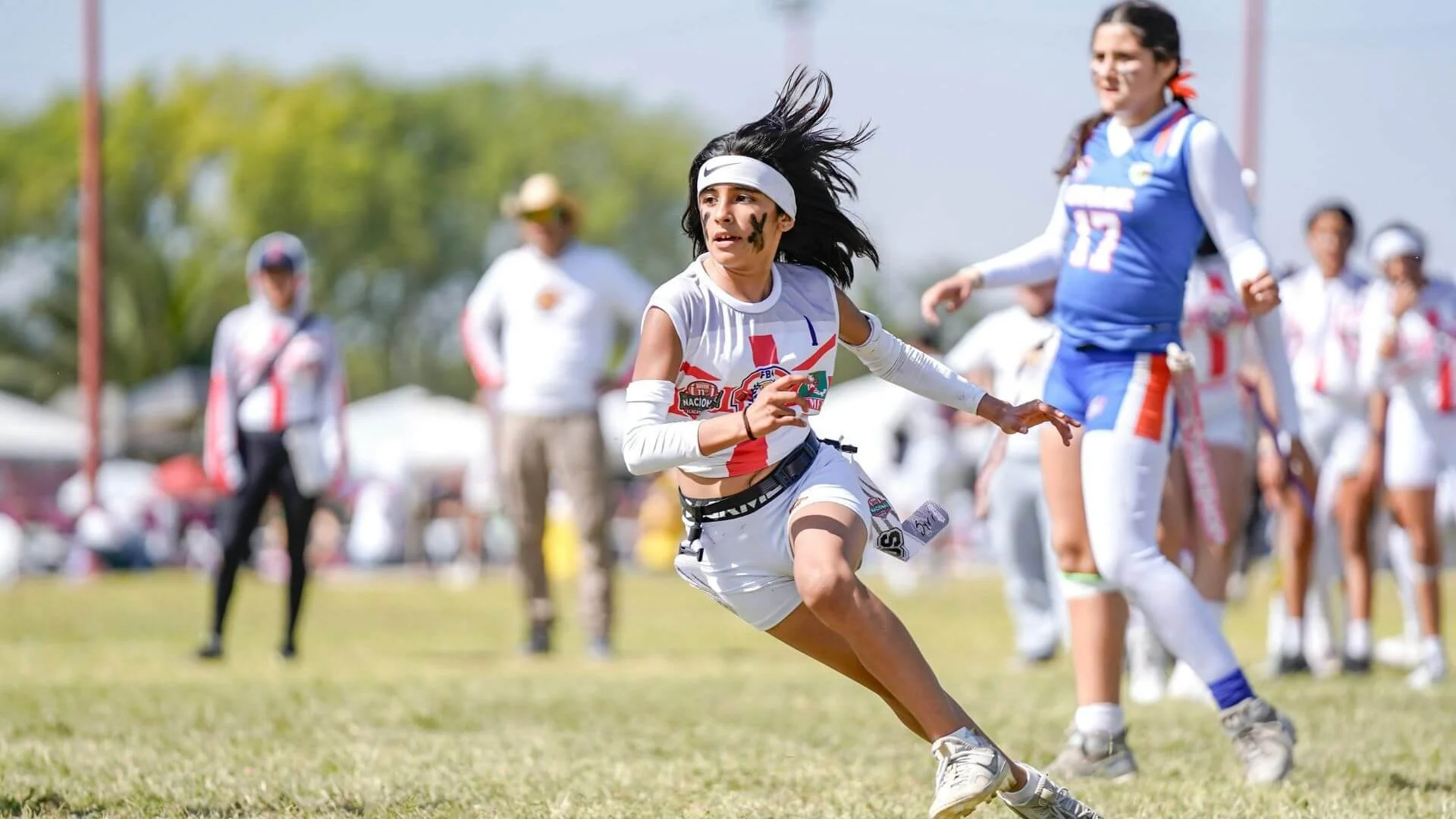
Why Core Training Matters For Athletic Performance
Athletes don’t do core strength training for appearances alone. You do them to build your core so it can handle the intense physical demands of your sport.
Athletes with stronger cores often experience:
better balance and coordination
improved power output
reduced injury risk
stronger lifting mechanics
more efficient movement patterns
Training the core consistently helps connect upper- and lower-body strength, allowing athletes to move faster and more safely.
Ready To Train Like An Athlete?
If you want help building a performance-focused training program, working with a certified personal trainer can help you target weaknesses and progress safely.
At Peak Physique, we design customized programs that help athletes and active adults build strength, confidence, and long-term fitness habits.
Reach out today to learn more about personal training options. Plus, you get your first workout free with your consultation.
FAQs About Core Training For Athletes
How do athletes strengthen their core?
Athletes can strengthen their core by using a combination of stability exercises, rotational movements, and loaded training. Instead of relying only on traditional crunches or sit-ups, athletes often train the core through movements like planks, carries, hanging leg raises, and medicine ball throws.
Consistent training that challenges balance, power transfer, and control helps improve overall athletic performance and reduce injury risk.
What are the big 3 core exercises?
The “Big 3” core exercises often refer to the McGill Big 3, which include the modified curl-up, side plank, and bird dog. These exercises are made with the intention of building core stability while minimizing strain on the spine.
Athletes frequently use these movements as part of warm-ups or recovery sessions to strengthen deep core muscles and improve movement efficiency.
Why is core strength important for athletes?
Core strength helps athletes generate power, maintain balance, and transfer force between the upper and lower body. A strong core supports faster sprinting, safer lifting mechanics, improved agility, and better control during sport-specific movements.
It also plays a major role in reducing the likelihood of lower back injuries and movement inefficiencies.
How often should athletes train their core?
Most athletes benefit from training their core two to four times per week, depending on their sport, recovery capacity, and overall training volume. Core work can be included as part of warm-ups, strength sessions, conditioning circuits, or dedicated training blocks.
Consistency is more important than intensity when building long-term core strength.
Are planks enough for athletic core development?
Planks are a great starting point, but athletes typically need more dynamic core training to fully support performance goals. Exercises that include rotation, anti-rotation, loaded carries, and explosive movements help develop functional strength that translates directly to sport.
Combining static holds with movement-based exercises leads to better results.
Can core training help prevent injuries in athletes?
Yes. Strong core muscles help stabilize the spine and pelvis during movement, which reduces stress on joints and surrounding muscles. This can lower the risk of strains, overuse injuries, and poor movement patterns that develop over time.
Core training is often included in injury prevention programs for athletes of all levels.