Foods That Keep You Full Longer: What We Tell Clients Who Are Always Hungry

Working with clients every day, we've noticed one challenge comes up again and again:
"I'm always hungry."
Sometimes it's mid-morning, just a couple of hours after breakfast. Other times it's late afternoon, when the snack cravings hit hard. Many people assume they just don't have enough willpower, but that's usually not the problem.
More often than not, they're simply eating foods that don't keep them satisfied.
One of the first nutrition changes we make with new clients isn't asking them to eat less; it's helping them choose foods that keep them full longer. When meals include the right balance of protein, fiber, healthy fats, and whole foods, people are often surprised by how much their cravings decrease and how much easier it becomes to stay consistent with their nutrition.
You shouldn't have to spend your day constantly thinking about food.
Whether your goal is to lose weight, build muscle, improve your energy, or simply stop feeling hungry all the time, choosing the right foods can make a bigger difference than you might think.
Let's look at the foods that keep you full longer and why we recommend them to so many of our clients.
Key Takeaways
Foods that keep you full longer are usually high in protein, fiber, water, or healthy fats.
Protein helps support muscle, stabilize hunger, and keep cravings more manageable.
Fiber slows digestion and adds volume to meals, helping you feel satisfied longer.
Whole foods are usually more filling than highly processed snacks.
Pairing protein, fiber, and water-rich foods together can make meals more satisfying.
Eating filling foods can support weight loss, muscle building, energy, and long-term consistency.
What Makes Food Keep You Full Longer?
Not all foods affect hunger the same way.
Some foods digest quickly and leave you hungry soon after eating. Others take longer to digest, add more volume to your stomach, and help regulate your appetite for hours.
The most filling foods usually include one or more qualities.
Protein
We talk about this all the time. Protein is one of the most important nutrients for fullness.
It takes longer to digest, helps support lean muscle, and can reduce the urge to snack shortly after eating. This is why meals with chicken, eggs, Greek yogurt, fish, cottage cheese, tofu, or beans usually feel more satisfying than meals made mostly from refined carbs.
Fiber
Fiber adds more bulk to your meals and slows digestion.
That means high-fiber foods like vegetables, fruit, oats, beans, lentils, and whole grains can help you feel full longer without needing huge portions.
Water Volume
Foods with high water content can help fill your stomach while still being lower in calories.
Think vegetables, fruit, soups, and potatoes. These foods add volume, which can help you feel satisfied without feeling overly stuffed.
Healthy Fats
Don’t be afraid of fats! Healthy fats digest more slowly and help meals feel more satisfying.
Foods like avocado, nuts, seeds, olive oil, and peanut butter can absolutely support fullness. The key is portion size, because fats are calorie-dense.
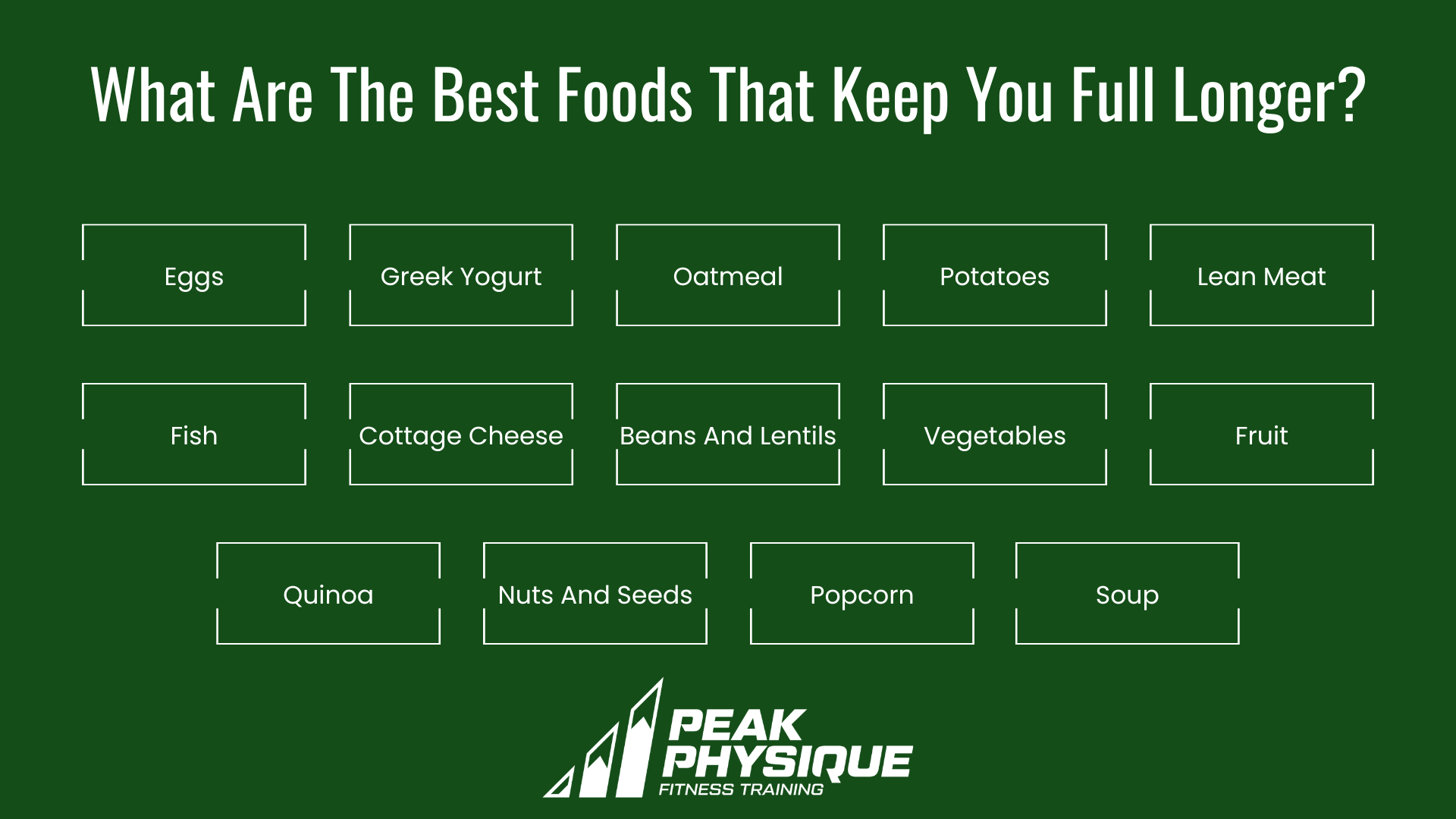
What Are The Best Foods That Keep You Full Longer?
If you’re trying to build meals that actually hold you over, these foods are great places to start.
1. Eggs
Eggs are one of the most simple, affordable, and filling foods you can add to your routine.
They’re high in quality protein and contain healthy fats that help slow digestion. Plus, they’re incredibly versatile.
You can eat them scrambled, hard-boiled, in an omelet, or paired with whole-grain toast and fruit for a balanced breakfast.
Why they help: eggs provide protein and fat, which helps keep hunger more stable throughout the morning.
2. Greek Yogurt
Greek yogurt is a great option when you want something quick, easy, and high in protein.
Compared to regular yogurt, Greek yogurt typically contains more protein, which makes it more filling. Add berries, chia seeds, or nuts, and you’ve got a snack or breakfast that can keep you satisfied for hours.
Why it helps: Greek yogurt combines protein with the option to add fiber and healthy fats.
3. Oatmeal
Oatmeal is a classic filling breakfast for a reason.
Oats have soluble fiber, which absorbs water and helps slow digestion. That’s why a bowl of oatmeal can feel more satisfying than many quick breakfast options.
To make it even more filling, add protein and healthy fat.
Try oatmeal with:
Greek yogurt
Protein powder
Peanut butter
Chia seeds
Berries
Nuts
Why it helps: oatmeal provides fiber and volume, especially when paired with protein.
4. Potatoes
Potatoes get a bad rep, but they can actually be very filling when prepared in a balanced way.
Boiled or baked potatoes are high in water, contain fiber, and give you satisfying carbohydrates that support energy.
The key is preparation. A baked potato with Greek yogurt, cottage cheese, beans, or lean protein is very different from a plate of fries.
Why they help: potatoes provide volume, water, fiber, and satisfying carbs.
5. Lean Meat
Lean meats like chicken, turkey, lean beef, and pork tenderloin are high in protein, making them very filling.
Protein helps preserve muscle, supports recovery from workouts, and keeps hunger more manageable between meals.
Pair lean meat with vegetables and a high-fiber carb for a balanced plate.
Why it helps: lean meat provides a strong protein base for meals.
6. Fish
Fish is another excellent high-protein food that can help keep you full longer.
Fatty fish like salmon also contain omega-3 fats, which support overall health. White fish is leaner but still packed with protein.
Both options can fit well into a balanced nutrition plan.
Why it helps: fish provides protein, and fatty fish also provides satisfying healthy fats.
7. Cottage Cheese
Cottage cheese is surprisingly high in protein and easy to use in both sweet and savory meals.
You can pair it with fruit, add it to toast, use it in bowls, or eat it as a snack. Because it’s rich in protein, it can be especially helpful when you need something quick but filling.
Why it helps: cottage cheese is protein-rich and easy to pair with fiber.
8. Beans And Lentils
Beans and lentils are some of the best foods that keep you full longer because they contain both protein and fiber.
We love beans and lentils because they’re so easy to add into any meal for added protein and fiber without even realizing they’re there.
Plus, we love that they’re affordable and great for plant-based eaters.
Try adding beans or lentils to:
Soups
Salads
Bowls
Wraps
Tacos
Chili
Why they help: beans and lentils provide protein, fiber, and slow-digesting carbohydrates.
9. Vegetables
Vegetables add volume, fiber, water, and nutrients to your meals.
They help fill your plate and your stomach without adding a lot of calories. This makes them especially helpful if you’re trying to lose weight or simply feel more satisfied after meals.
Some great options include:
Broccoli
Cauliflower
Carrots
Cucumbers
Zucchini
Salad greens
Peppers
Green beans
Why they help: vegetables add high-volume, low-calorie fullness to meals.
10. Fruit
Whole fruit is much more filling than fruit juice because it contains fiber and water.
Berries, apples, oranges, bananas, and pears can all help satisfy a sweet craving while also supporting fullness.
Fruit works especially well when paired with protein or healthy fat.
Try:
Apple with peanut butter
Berries with Greek yogurt
Banana with cottage cheese
Orange with a handful of nuts
Why it helps: whole fruit provides fiber, water, and natural sweetness.
11. Quinoa
Quinoa is a great option because it contains both fiber and plant-based protein. It works well in grain bowls, salads, breakfast bowls, or as a side dish.
If rice or pasta leaves you hungry quickly, quinoa may be a more filling option.
Why it helps: quinoa provides protein, fiber, and steady carbohydrates.
12. Nuts And Seeds
Nuts and seeds can help keep you full longer thanks to their combination of healthy fats, protein, and fiber.
Great options include:
Almonds
Walnuts
Pistachios
Chia seeds
Flax seeds
Pumpkin seeds
Just remember that portions matter. Nuts and seeds are nutrient-dense, but they’re also calorie-dense.
Why they help: nuts and seeds add healthy fats, protein, and fiber.
13. Popcorn
Air-popped popcorn is a great high-volume snack.
It’s a whole grain, contains fiber, and gives you a lot of food volume compared to many packaged snack foods.
The key is keeping toppings reasonable. Butter-heavy movie theater popcorn is not the same as air-popped popcorn with light seasoning.
Why it helps: popcorn is high-volume and fiber-rich.
14. Soup
Soup can be surprisingly filling, especially when it contains protein, vegetables, and beans or lentils.
Soup naturally contains a lot of water, so it adds volume to your meal and can help you feel satisfied.
Look for soups that include:
Lean protein
Vegetables
Beans or lentils
Broth-based ingredients
Why it helps: soup combines water volume, warmth, and nutrients that help increase fullness.

How To Build Meals That Keep You Full
It’s easy for us to sit here and tell you what types of foods can help you stay fuller for longer, but how you actually put them together is another challenge.
A meal that keeps you full longer usually includes:
Protein
Fiber-rich carbs
Vegetables or fruit
Healthy fats
Water or hydration
For example:
Greek yogurt + berries + chia seeds
Chicken + sweet potato + broccoli + avocado
Eggs + whole-grain toast + fruit
Salmon + quinoa + vegetables
Lentil soup + side salad
Easy Meals Featuring Foods That Keep You Full Longer
Knowing which foods help you stay full is one thing. Actually using them throughout your week is another.
Here are a few simple meal ideas we often recommend to clients who are trying to reduce cravings, manage hunger, and stay consistent with their nutrition goals.
Protein-Packed Greek Yogurt Bowl
Combine plain Greek yogurt with fresh berries, a handful of almonds, or add a sprinkle of chia seeds. This delicious combination provides protein, fiber, and healthy fats that can help keep you satisfied for hours.
Egg and Avocado Breakfast Toast
Top whole-grain toast with mashed avocado and two eggs cooked your favorite way. The combination of protein, fiber, and healthy fats makes this a much more filling option than a typical breakfast pastry or cereal.
Lentil and Chicken Power Bowl
Start with lentils as your base and add grilled chicken, mixed vegetables, and a light vinaigrette. This meal delivers a powerful combination of protein and fiber that helps control hunger long after lunch is over.
Cottage Cheese and Fruit Snack
Pair cottage cheese with sliced strawberries, blueberries, or peaches for an easy snack that provides protein, nutrients, and natural sweetness without leaving you hungry an hour later.
Salmon, Vegetables, and Roasted Potatoes
This is one of our favorite balanced dinners. The protein from the salmon, fiber from the vegetables, and satisfying carbohydrates from the potatoes create a meal that supports recovery while helping you stay full throughout the evening.
Overnight Oats with Protein
Mix oats, milk, Greek yogurt, chia seeds, and your favorite fruit before bed. By morning, you'll have a convenient breakfast packed with fiber and protein that can help prevent mid-morning hunger.
Why do Filling Foods Matter For Weight Loss?
If you’re trying to lose weight, hunger can be one of the biggest challenges. That’s why choosing foods that keep you full longer is so helpful.
When your meals are satisfying, it becomes easier to:
Reduce unnecessary snacking
Avoid overeating later
Stay consistent with your nutrition plan
Maintain energy for workouts
Feel less restricted
You don’t need to eat tiny portions or feel miserable to make progress. In fact, the best nutrition plan is usually the one that feels sustainable and naturally fits into your life.
Why Do Filling Foods Matter For Muscle Building?
If your goal is building muscle, fullness still matters.
You need enough protein, calories, and nutrients to support training and recovery. Choosing filling, nutrient-dense foods helps you fuel your workouts without relying only on ultra-processed snacks or random meals.
Protein-rich foods are especially important because they support muscle repair and growth after strength training.
At Peak Physique, we always remind clients that food is fuel.
And the better you fuel your body, the better it can perform.

Build A Nutrition Plan That Supports Your Goals
At Peak Physique, we believe fitness and nutrition should support your life, not make you feel overwhelmed by it.
Foods that keep you full longer can help you feel more energized, more satisfied, and more consistent with your goals.
Whether you’re working toward weight loss, muscle building, better energy, or a healthier relationship with food, the right habits matter.
And remember, you don’t have to figure it all out alone.
Our trainers are here to help you build a plan that fits your real life, your goals, and your body.
FAQs About Foods That Keep You Full Longer
What Foods Keep You Full The Longest?
Foods high in protein, fiber, water, and healthy fats tend to keep you full the longest. Great examples include eggs, Greek yogurt, oatmeal, potatoes, fish, chicken, vegetables, beans, lentils, fruit, nuts, and soup.
What Should I Eat To Stay Full For Hours?
Try building meals with protein, fiber-rich carbohydrates, vegetables, and healthy fats. For example, eggs with whole-grain toast and fruit or chicken with quinoa and vegetables can help keep you satisfied longer.
Are High-Protein Foods More Filling?
Yes. Protein is one of the most filling nutrients and can help reduce hunger, support muscle recovery, and keep cravings more manageable.
Does Fiber Help You Feel Full?
Yes. Fiber slows digestion and adds bulk to meals, helping you feel fuller for longer.
Are Potatoes Good For Keeping You Full?
Yes, especially boiled or baked potatoes. They contain water, fiber, and satisfying carbohydrates, making them more filling than many people realize.
What Snacks Keep You Full Longer?
Good filling snacks include Greek yogurt with berries, apple slices with peanut butter, cottage cheese with fruit, hard-boiled eggs, hummus with vegetables, nuts, or air-popped popcorn.
Can Filling Foods Help With Weight Loss?
Yes. Choosing foods that keep you full longer can help reduce hunger, support portion control, and make weight loss feel more sustainable.
How Can I Stop Feeling Hungry All The Time?
Start by making sure each meal includes enough protein, fiber, and hydration. If you’re still hungry often, you may need to adjust meal timing, portion sizes, sleep, stress, or overall calorie intake.