Beginner's Guide to Getting Fit: How to Start and Stick With It
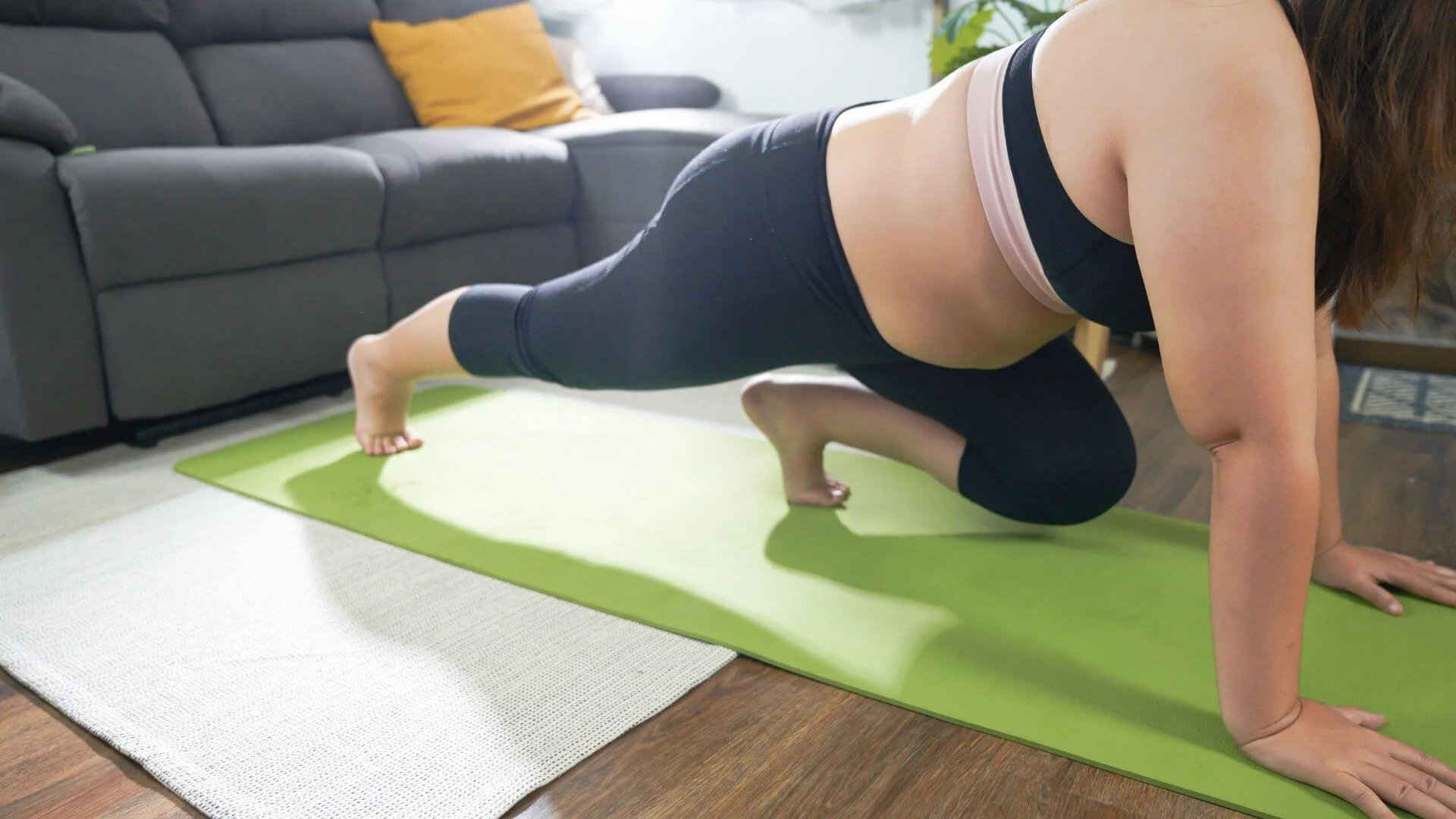
Getting fit can feel overwhelming when you’re starting from scratch.
How often should you work out? Should you focus on cardio or strength training? How hard should your workouts be? And how are you supposed to fit all of this into an already busy schedule?
Here’s the good news: getting fit doesn’t require completely changing your life overnight.
In fact, starting too aggressively can make it harder to create a routine you’ll actually maintain. A better approach is to start where you are, set realistic goals, and gradually build habits that work for your body and your life.
If you’re ready to start getting fit but aren’t sure where to begin, here are some of the most important things to know.
Key Takeaways
Start small and gradually build a fitness routine you can maintain.
Choose activities and goals that realistically fit your lifestyle.
Include cardio, strength training, and recovery in your routine.
Focus on consistency and long-term progress rather than perfection.
Get personalized support when you need help reaching your fitness goals.
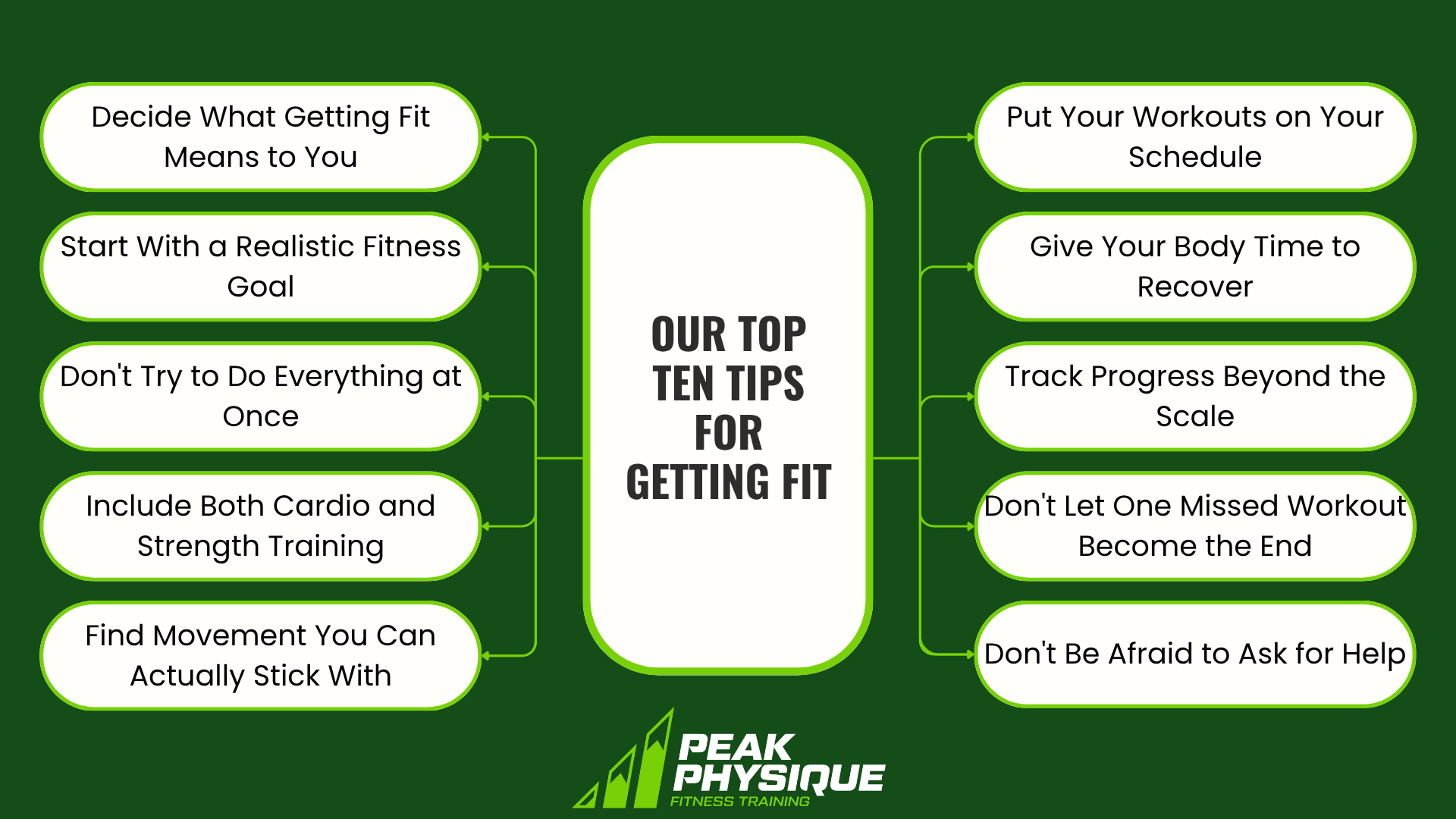
Our Top Ten Tips For Getting Fit
When you’re a beginner trying to get fit by exercising more, it’s hard to know where to start. Let us help you create a plan that makes getting fit just a bit easier.
1. Decide What Getting Fit Means to You
Before creating a workout routine, think about what you actually want to accomplish.
“Getting fit” means something different to everyone.
Maybe you want to:
Feel stronger during everyday activities
Have more energy
Improve your endurance
Build muscle
Lose weight
Improve your mobility
Support your mental health
Keep up with your kids
Return to exercise after taking time away
Simply feel better in your body
Having a clear reason for exercising can help you create goals that are meaningful to you rather than chasing someone else's definition of fitness. Don’t think that the only goal of getting fit is reducing numbers on a scale.
Exercise can support your mood, mental health, sleep, strength, balance, and overall health, so think about all the ways being more active can help you.
At Peak Physique, we want you to feel empowered, not exhausted. Getting fit isn't about punishing your body. It's about discovering what your body can do and building from there.
2. Start With a Realistic Fitness Goal
Once you know your “why,” turn it into something you’re excited to work toward.
Instead of: “I need to get in shape.”
Try: “I want to strength train twice a week for the next six weeks.”
Or instead of: “I want better endurance.”
Try: “I want to be able to walk for 30 minutes without needing to stop.”
Starting with small, achievable goals can make it easier to stay motivated and build on your progress over time. Creating your first fitness goal as a beginner doesn’t need to be complicated; it just needs to be something you can achieve to help keep you motivated.
3. Don't Try to Do Everything at Once
This is a mistake we see beginners make all the time.
You feel motivated, so suddenly you're going to work out five days a week, overhaul your diet, wake up at 5 a.m., drink more water, hit 10,000 steps every day, and never eat dessert again.
Then real life happens. Sustainable fitness is built gradually.
If you haven't exercised regularly in a while, give your body time to adjust. Starting slowly and progressively increasing your activity can make fitness much more manageable. It also gives your body time to recover.
Your starting point might be two workouts per week, or just making sure to take a walk every day. That's okay as long as it’s something you can stick to.
4. Include Both Cardio and Strength Training
A well-rounded fitness routine includes different types of movement.
Cardiovascular exercise includes activities that increase your heart rate and get you breathing heavier, such as walking, jogging, cycling, swimming, and dancing.
Strength training focuses on challenging your muscles through resistance. That could include weights, resistance bands, machines, or bodyweight exercises.
Current physical activity recommendations call for adults to work toward at least 150 minutes of moderate-intensity aerobic activity per week or 75 minutes of vigorous activity, along with muscle-strengthening activities for all major muscle groups at least twice per week.
If you're nowhere near that yet, don't let those numbers discourage you.
They're something you can work toward, not a requirement you have to meet on day one.
5. Find Movement You Can Actually Stick With
The “best” workout isn't necessarily the one that burns the most calories or looks the hardest on social media. It's the one you'll consistently do.
There are plenty of ways to move your body: strength training, walking, swimming, cycling, dancing, Pilates, group fitness, sports, and more.
You don't even have to love every second of exercising.
What's more important is finding movement that makes you feel good enough to keep coming back. Enjoyable activities, recognizing the benefits of exercise, and making movement a regular habit can all help maintain a routine over time.
Fitness should complement your life, not take it over or feel like yet another item on your list to check off.
6. Put Your Workouts on Your Schedule
One of the biggest barriers to getting fit isn't knowing what to do. It's finding the time to do it.
Work gets busy. Kids need you. Appointments pile up. You're tired. Suddenly the workout you were definitely going to do today gets pushed to tomorrow.
Instead of waiting until you “have time,” decide ahead of time when movement fits into your week.
Maybe that's:
Two personal training sessions each week
A 20-minute walk during lunch
Strength training before work
A weekend bike ride with your family
Short workouts on especially busy days
And remember: a workout doesn't have to be an hour long to count.
Shorter bouts of activity can be easier to incorporate when your schedule is packed. The important part is finding an approach you can realistically repeat.
7. Give Your Body Time to Recover
More isn't always better.
Your body needs recovery time, especially when you're beginning a new fitness routine. Going too hard too quickly can leave you overly sore, exhausted, or discouraged.
Rest days are part of training, not evidence that you're slacking, so pay attention to how your body responds to exercise, and give yourself permission to adjust as needed.
If you're experiencing pain, dizziness, nausea, unusual shortness of breath, or significant discomfort while exercising, stop and listen to what your body is telling you.
If you have an injury, medical condition, or concerns about beginning an exercise program, talk with your healthcare professional before getting started.
8. Track Progress Beyond the Scale
Getting fit doesn't always produce dramatic changes you can immediately see in the mirror.
Some of the most meaningful progress happens elsewhere, and at Peak Physique we don’t track your success using weight alone.
Here are some wins that may seem small, but truly add value to your daily life:
You can carry all the groceries inside without getting winded.
The weight that felt heavy a month ago feels manageable now.
You're sleeping better.
Running after your kids doesn’t drain you.
Your balance has improved.
You're less intimidated by exercise.
You simply feel stronger.
Keeping track of your workouts, weights, repetitions, walking distance, or other performance markers can help you recognize progress that might otherwise be easy to overlook.
And always celebrate those wins! They're evidence that what you're doing is working and will help you keep going.
9. Don't Let One Missed Workout Become the End
We’ve heard this from people all the time. They miss one day, and then suddenly it turns into guilt, and now you’re continuously missing days, and before you know it, you’re out of the habit of working out.
So don’t let one missed workout become the end of your fitness journey. You will miss workouts; everyone does, and that’s okay!
You might get sick. Your kids might get sick. Work might become chaotic. You might go on vacation. Or you might simply have a week when exercise isn't your highest priority.
That doesn't erase the progress you've already made. One of the most important parts of long-term fitness is learning how to come back after life interrupts your routine.
Rather than thinking, “I blew it, so I'll start Monday again,” simply pick up where you left off.
Consistency doesn't require perfection.
10. Don't Be Afraid to Ask for Help
If you've never exercised before, or you've tried several times and struggled to make it stick, you don't have to figure everything out on your own!
A personal trainer can help you understand where you're starting, establish realistic goals, learn proper exercise techniques, and develop a program based on your individual needs. Even general beginner fitness guidance recognizes that working with a personal trainer can help people understand their limitations and create a plan tailored to their needs.
That's especially valuable if walking into a traditional gym and trying to figure out the equipment on your own sounds intimidating.
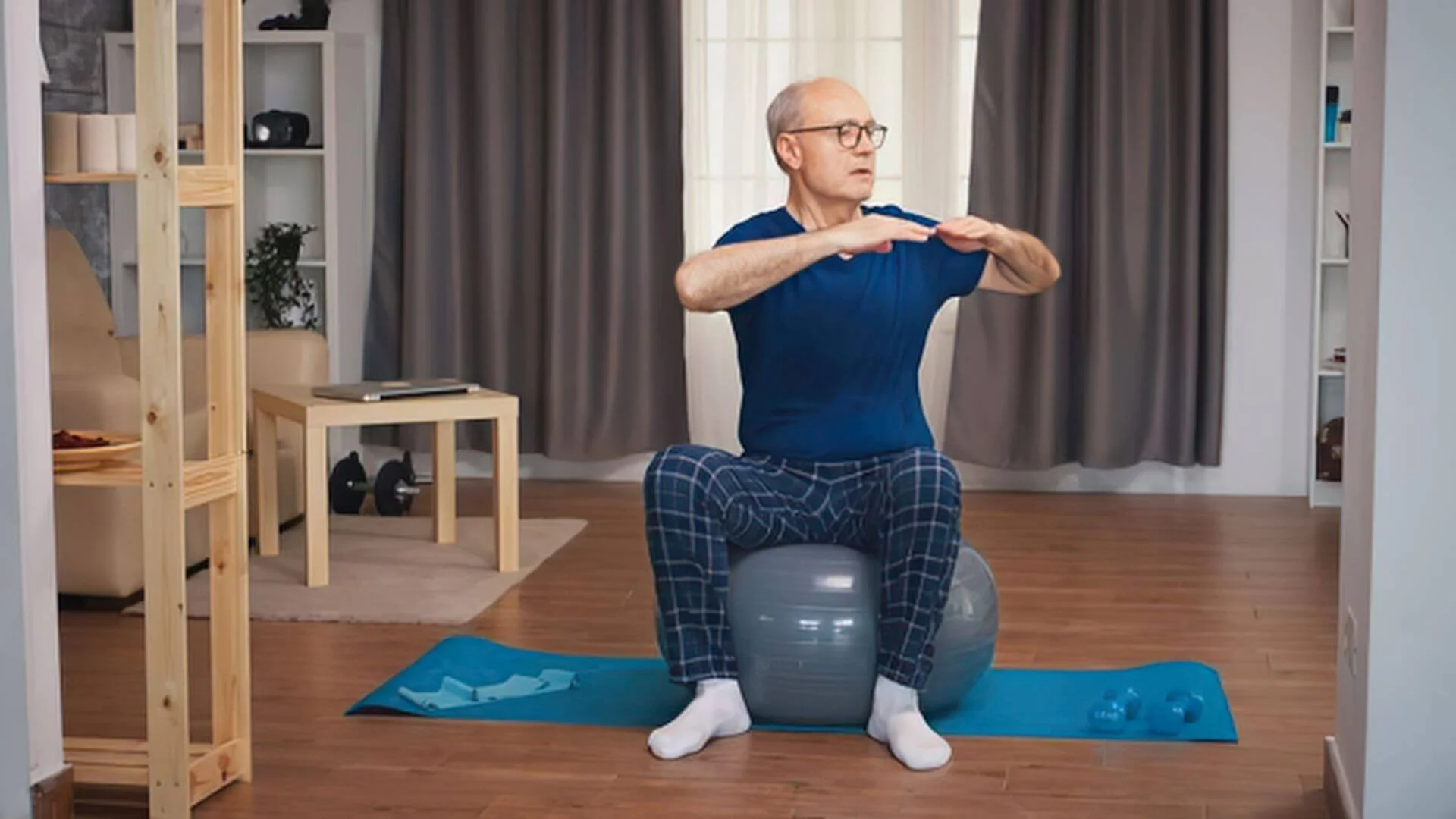
Getting Fit Is About Building Something You Can Keep
You don't need to become a completely different person to get fit. You don't need perfect motivation. And you certainly don't need to exhaust yourself every time you exercise.
Start small. Find movement you enjoy. Set goals that matter to you. Give yourself time to improve. And when life gets in the way, adjust and keep moving forward.
The goal isn't to create the perfect fitness routine for the next 30 days.
It's to create a healthier relationship with movement that can stay with you for years.
At Peak Physique, our trainers provide personalized coaching, accountability, and a community that celebrates progress over perfection. Whether you're completely new to exercise or ready to get back into a routine, we'll meet you where you are and help you figure out what comes next.
Train here. Train anywhere. We'll guide you.
Reach out to us today and get your first workout free with your consultation.