How Does Exercise Improve Mental Health?

Most people walk into the gym hoping to change something about their body.
Maybe they want to get stronger, lose weight, or have more energy. Those are great goals, but one of the biggest transformations often happens where you can't see it.
At Peak Physique, we've watched members come in expecting physical results and leave talking about something completely different. They're sleeping better. They have more patience with their kids. Work feels less overwhelming. They're more confident, less stressed, and finally starting to feel like themselves again.
That's because exercise does more than build muscle; it supports your mind, too.
If you've ever wondered how does exercise improve mental health, the answer goes far beyond the temporary "runner's high." Regular movement can help reduce stress, improve your mood, sharpen your thinking, and build the resilience you need to handle life's challenges. Better yet, you don't have to spend hours in the gym to experience these benefits. Even moderate exercise can make a meaningful difference.
Key Takeaways
Exercise supports both your mental and physical health.
Regular movement can help reduce stress, improve mood, and ease symptoms of anxiety and depression.
Physical activity improves sleep, focus, confidence, and emotional resilience.
You don't need intense workouts to experience the mental health benefits of exercise.
Consistency matters far more than perfection.
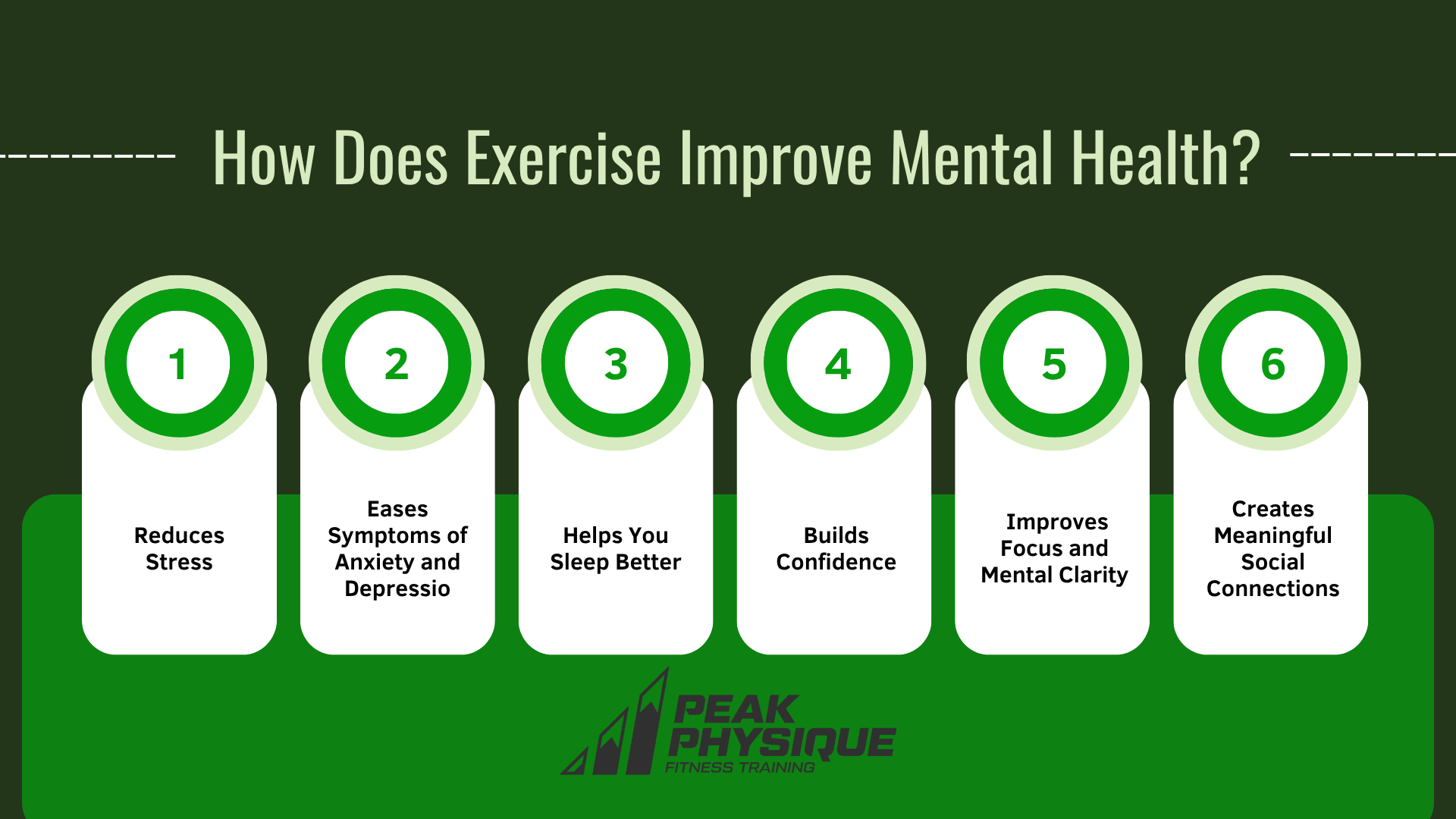
How Does Exercise Improve Mental Health?
Your brain and body are connected in more ways than you may realize.
When you exercise, your body releases chemicals that help improve your mood and sense of well-being. Physical activity can also help regulate stress hormones, improve sleep quality, reduce muscle tension, and increase energy levels. Together, these changes help you feel calmer, think more clearly, and better manage everyday stress.
Exercise also gives you something that's easy to overlook: momentum.
Every workout is proof that you showed up for yourself. Those small wins build confidence over time, and that confidence often carries into other areas of life.
Let's look at some of the biggest ways regular exercise supports your mental well-being.
1. Exercise Helps Reduce Stress
Stress has a way of showing up physically.
Maybe your shoulders feel tight after a long workday. Your neck aches. Your jaw stays clenched. Or maybe your mind just won't slow down.
Exercise provides a healthy outlet for that built-up tension.
Moving your body helps reduce muscle tension while encouraging the release of chemicals that help you feel calmer and more relaxed. Many people also find that a workout gives them a mental reset, allowing them to step away from constant emails, deadlines, and responsibilities for a little while.
One of the best parts?
The stressors in your life may not disappear, but you often leave the gym feeling better equipped to handle them.
2. Exercise Can Help Ease Symptoms of Anxiety and Depression
Exercise isn't a cure for anxiety or depression, and it should never replace professional care when it's needed.
However, research consistently shows that regular physical activity can help reduce symptoms of mild to moderate anxiety and depression and is often recommended alongside therapy or other treatments.
Movement helps interrupt cycles of negative thinking, provides a healthy distraction from daily worries, and gives you a sense of accomplishment that can be difficult to find when you're struggling.
Even a brisk walk, bike ride, or strength-training session can leave you feeling more positive than when you started.
And if you've ever finished a workout thinking, "I'm really glad I came today," as so many of our clients do, then you've experienced exactly what the research describes.
3. Exercise Helps You Sleep Better
Good sleep and good mental health go hand in hand.
When you're well-rested, it's easier to stay focused, regulate your emotions, and handle everyday challenges. On the other hand, poor sleep can leave you feeling overwhelmed, irritable, and mentally drained.
Regular exercise has been shown to help people fall asleep faster, sleep more deeply, and wake up feeling more refreshed.
We've had members tell us that better sleep was one of the first benefits they noticed after starting a consistent workout routine, even before they saw physical changes.
Sometimes improving your mental health starts with giving your body the rest it needs.
4. Exercise Builds Confidence
Confidence doesn't usually appear overnight. It grows through small victories.
Maybe it's finishing your first workout after months away. Adding five pounds to a lift. Walking farther than you did last week. Or simply showing up on a day when you didn't feel like it.
Those moments matter. Each one reminds you that you're capable of more than you thought.
At Peak Physique, one of our favorite things to watch is the moment someone realizes they can do something they never imagined they could. That's why we believe fitness is about so much more than appearance.
It's about discovering your own strength. And that confidence rarely stays inside the gym.
5. Exercise Improves Focus and Mental Clarity
Have you ever noticed that your head feels clearer after a workout?
That's not a coincidence.
Research suggests regular physical activity can improve concentration, memory, and overall cognitive function. Many people find they're able to think more clearly and stay focused after exercising.
Whether you're tackling a big project at work or simply trying to stay present with your family, regular movement helps support a healthier, sharper mind.
Sometimes the best way to solve a problem is to step away from your desk and go for a walk.
6. Exercise Creates Meaningful Social Connections
Mental health isn't only about what's happening inside your mind. Feeling connected to other people matters, too.
Working out with others creates opportunities for encouragement, accountability, and genuine friendships. Whether it's celebrating a new personal best or simply sharing a laugh between sets, those interactions help many people feel supported and less alone.
That's one of the reasons community is such an important part of Peak Physique.
We're not a big-box gym where everyone keeps their headphones on and avoids eye contact.
We're a place where people know your name, celebrate your progress, and remind you that you don't have to do this alone. We even have a women-only gym right here in Troy, Michigan for women looking for more privacy.

You Don't Have to Work Out for Hours
One of the biggest misconceptions about exercise is that you have to spend hours in the gym to experience meaningful mental health benefits.
Fortunately, that's simply not true.
Research shows that even moderate exercise can improve your mood and overall well-being. Walking, strength training, cycling, swimming, yoga, and other forms of movement can all make a positive difference. Even short sessions throughout the day are better than doing nothing at all.
Moving Your Body Is One Way to Care for Your Mind
People often think they're joining a gym to change how they look. Sometimes they do.
But what keeps them coming back is how they feel.
They have more energy when they wake up. They feel calmer after stressful days. They handle challenges with greater confidence. They start believing in themselves again.
That's the power of movement.
At Peak Physique, we believe exercise is one of the most powerful forms of self-care. It's not about punishing your body or chasing perfection. It's about becoming stronger physically, mentally, and emotionally, one workout at a time.
If you're struggling with persistent anxiety, depression, or other mental health concerns, exercise can be an important part of your overall wellness plan, but it shouldn't replace care from a qualified healthcare or mental health professional when additional support is needed.

Ready to Experience the Benefits of Exercising and Improving Your Mental Health?
Reading about the benefits of exercise is a great first step. Experiencing them is even better.
Schedule your free consultation today and enjoy your first workout completely free. We'll get to know your goals, answer your questions, and create a personalized training plan that helps you move better, feel stronger, and support both your physical and mental well-being.
Frequently Asked Questions About How Exercise Improves Mental Health
How does exercise improve mental health?
Exercise supports mental health by helping reduce stress, improving mood, boosting confidence, enhancing sleep quality, and sharpening focus. Regular physical activity can also help ease symptoms of anxiety and depression as part of an overall treatment plan.
Can exercise reduce stress?
Yes. Exercise helps relieve physical tension, regulate stress hormones, and provide a healthy outlet for daily stress, leaving many people feeling calmer and more relaxed afterward.
Is exercise good for anxiety and depression?
Research suggests regular exercise can help reduce symptoms of mild to moderate anxiety and depression. While it isn't a replacement for therapy or medication when needed, it can be an effective part of a comprehensive mental health plan.
What type of exercise is best for mental health?
Walking, strength training, cycling, swimming, yoga, and other activities can all benefit mental health. The best exercise is the one you enjoy and can do consistently.
How much exercise do I need to improve my mental health?
You don't need marathon workouts. Even moderate exercise or shorter activity sessions throughout the week can provide meaningful mental health benefits when done consistently.