Importance Of Training In Your 40s

Your 40s can be one of the busiest decades of your life. Between advancing your career, raising kids, caring for family, and trying to find time for yourself, exercise often gets pushed to the bottom of the list.
Ironically, it's also one of the times when your body benefits most from movement.
While it's normal to notice changes in your strength, energy, and recovery as you get older, those changes don't mean you have to slow down. In fact, regular exercise can help you stay strong, mobile, and confident for decades to come.
At Peak Physique, we've worked with countless adults who thought they had "missed their chance" to get healthy. The truth is, it's never too late to build strength, improve your health, and discover what your body is still capable of.
Let's take a look at the importance of training in your 40s and why making exercise a priority now can improve your quality of life for years to come.
Key Takeaways
Regular exercise helps preserve muscle, strengthen bones, and support a healthy metabolism as you age.
Staying active improves energy, mobility, sleep, and stress management.
Strength training becomes increasingly important after 40 because it helps maintain muscle mass and independence.
A balanced fitness routine should include strength training, cardiovascular exercise, mobility work, and recovery.
Working with a coach can help you train safely, stay accountable, and build a program that fits your goals.
Why Training Becomes More Important In Your 40s
Your body naturally changes as you age.
Recovery may take a little longer. You might notice it's easier to gain weight than it used to be, or that lifting heavy boxes, climbing stairs, or spending all day on your feet feels more challenging.
Those changes are completely normal. But they're also one of the biggest reasons to keep moving.
One of Nick's favorite things to tell new members is that your body is incredibly adaptable. No matter where you're starting, it can become stronger than it is today.
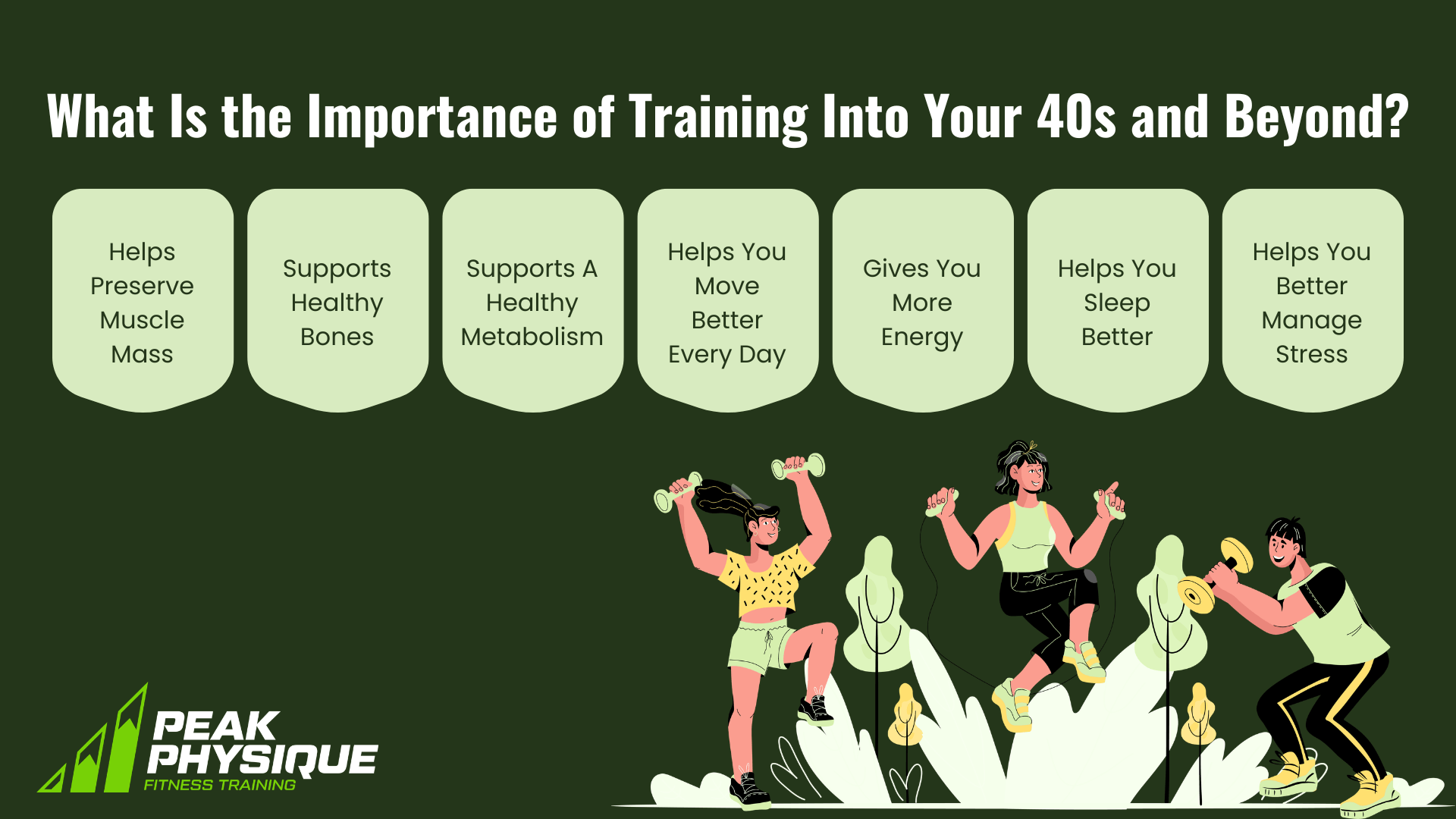
What Is the Importance of Training Into Your 40s and Beyond?
Exercise doesn't stop the aging process, but it helps your body adapt to it. Here’s why we firmly believe it’s so important to train in your 40s and beyond.
Training Helps Preserve Muscle Mass
One of the biggest physical changes that happens as we age is the gradual loss of muscle mass, a process known as sarcopenia.
Without regular strength training, adults naturally begin losing muscle over time. Less muscle doesn't just affect your appearance; it can also reduce your strength, slow your metabolism, and make everyday activities more difficult.
Fortunately, your muscles respond to training at any age.
Strength training encourages your body to maintain and build lean muscle, making everyday tasks like carrying groceries, lifting your grandchildren, or tackling home projects much easier.
We've seen members in their 40s, 50s, and beyond become stronger than they were ten years earlier simply because they committed to showing up consistently.
Training Supports Healthy Bones
Most people think about their muscles when they lift weights, but your bones benefit too.
After the age of 40, bone density naturally begins to decline, increasing the risk of osteoporosis and fractures later in life. In fact, osteoporosis affects 1 in 3 women and 1 in 5 men who are over the age of 50.
Resistance training places healthy stress on your bones, encouraging them to stay stronger and denser. Combined with proper nutrition, it can play a significant role in maintaining bone health as you age.
Strong bones support an active lifestyle, allowing you to continue hiking, traveling, gardening, and enjoying the activities you love with greater confidence.
Exercise Supports A Healthy Metabolism
Have you ever felt like your body doesn't respond the same way it used to?
You're not imagining it.
As we age, our metabolism naturally slows, and losing muscle mass can make it even harder to maintain a healthy weight and consistent energy levels.
That's where strength training becomes so valuable.
Building and maintaining lean muscle helps your body use energy more efficiently while supporting long-term metabolic health.
Rather than focusing solely on the number on the scale, we encourage members to focus on becoming stronger, more active, and healthier overall. Those habits create lasting results.
Personal Training Helps You Move Better Every Day
Fitness isn't just about what happens inside the gym. It's about making everything outside the gym easier, and we talk about this all the time.
Regular exercise improves your balance, coordination, flexibility, and mobility, helping you move more comfortably throughout your day.
Whether you're carrying groceries, climbing stairs, playing with your kids, or working in the yard, staying active helps your body continue doing the things you enjoy without unnecessary aches and pains.
Movement creates freedom, and that's one of the greatest gifts exercise provides.
Exercise Gives You More Energy
One of the biggest surprises for many new members is how much more energy they have after a few weeks of regular exercise.
While working out certainly requires effort, regular movement helps your heart, lungs, and muscles become more efficient. That means your body uses oxygen and energy better throughout the day.
Instead of feeling exhausted after work, you may find you have more energy to spend with your family, enjoy hobbies, or simply feel more productive throughout the day.
Sometimes the best way to create more energy is to start moving.
Exercise Helps You Sleep Better
Quality sleep becomes increasingly important as we get older. Exercise has been proven to improve the sleep you get and helps you sleep more fully throughout the night.
Good sleep also supports muscle recovery, hormone regulation, and mental clarity, creating a cycle where exercise and recovery work together.
If you've struggled with restless nights, adding consistent movement to your weekly routine may make a noticeable difference.
Training Helps You Better Manage Stress
Life in your 40s can be demanding.
Between work, family responsibilities, financial pressures, and everything else life throws your way, stress can quickly become part of your daily routine.
Exercise provides a healthy outlet.
Moving your body helps reduce stress, clear your mind, and improve your mood. Many of our members tell us they walk into the gym feeling overwhelmed and leave feeling calmer, more focused, and ready to tackle the rest of their day.
That's one of the reasons we say Peak Physique is where movement meets mental health.
What Types Of Training Are Best In Your 40s?
A well-rounded fitness routine includes more than just lifting weights.
For long-term health, we recommend combining:
Strength training to build muscle, protect bone health, and support metabolism.
Cardiovascular exercise to strengthen your heart and improve endurance.
Mobility and flexibility work to help your joints move comfortably and reduce stiffness.
Recovery days that allow your body to repair and come back stronger.
The goal isn't to train harder than everyone else. It's to train smarter and stay consistent.

Why The Importance Of Personal Training Grows As You Age
Starting a new fitness routine can feel intimidating, especially if it's been years since you've exercised consistently.
That's where the importance of personal training becomes clear.
A knowledgeable coach helps you exercise safely, build confidence, and follow a program that's designed specifically for your body, goals, and experience level.
At Peak Physique, we don't do cookie-cutter workouts. Every program is personalized because no two people have the same goals, injuries, or lifestyle.
Having expert guidance also provides something many people need most: accountability. Knowing someone is in your corner makes it easier to stay consistent, even when life gets busy.
It's Never Too Late To Start!
Your body is incredibly resilient, and it can adapt at any age. Every workout is an opportunity to build strength, improve your health, and prove to yourself that change is still possible.
You don't have to be perfect. You just have to begin.
Ready To Invest In Your Health With Personal Training in Troy?
There's no better time than today to start building a stronger, healthier future.
Whether you're new to exercise or looking to get back into a routine, our team is here to help you every step of the way with personalized coaching, expert guidance, and a community that genuinely wants to see you succeed.
Schedule your free consultation today and enjoy your first workout completely free. We'll get to know your goals, answer your questions, and create a training plan that's built around your lifestyle, not a cookie-cutter program.
Frequently Asked Questions
Why is the importance of training greater after 40?
As you age, your body naturally loses muscle mass, bone density, and flexibility. Regular exercise helps slow these changes while improving strength, mobility, energy, and overall health.
Can you still build muscle in your 40s?
Absolutely. With consistent strength training, proper nutrition, and adequate recovery, adults in their 40s and beyond can build muscle and become significantly stronger.
How often should someone in their 40s exercise?
Most adults should aim for at least 150 minutes of moderate aerobic activity each week and strength training at least two days per week.
What is the best type of exercise after 40?
A combination of strength training, cardiovascular exercise, mobility work, and recovery provides the greatest long-term health benefits.
Why is personal training beneficial as you age?
Working with a coach helps ensure you're exercising safely, progressing appropriately, and following a personalized plan that fits your goals, making it easier to stay consistent and avoid injury.
This article was originally published on December 12th, 2019, but was updated on July 20th, 2026, with new information.