What Is Functional Strength Training & Why We Think It's More Useful Than You Think

Think about everything your body does in a typical day.
You get out of bed, carry groceries, climb stairs, pick up things off the floor, and maybe chase your kids or grandkids.
Now, think about how much easier those activities could feel if you were stronger, more balanced, and more confident in your movements. That's where functional strength training comes in.
At Peak Physique, we believe exercise should do more than make you stronger in the gym. It should help you move better and feel stronger in your everyday life.
Let's break down functional strength training, its benefits, and exercises that build strength you'll actually use.
Key Takeaways
Functional strength training builds strength for everyday movements like lifting, carrying, pushing, and pulling.
Exercises often work multiple muscle groups together rather than focusing on one muscle.
Functional training can improve balance, coordination, mobility, and stability.
Common functional strength training exercises include squats, lunges, deadlifts, rows, and farmer's carries.
You don't need special equipment or advanced fitness experience to get started.
The best functional exercises depend on your abilities, goals, and everyday activities.
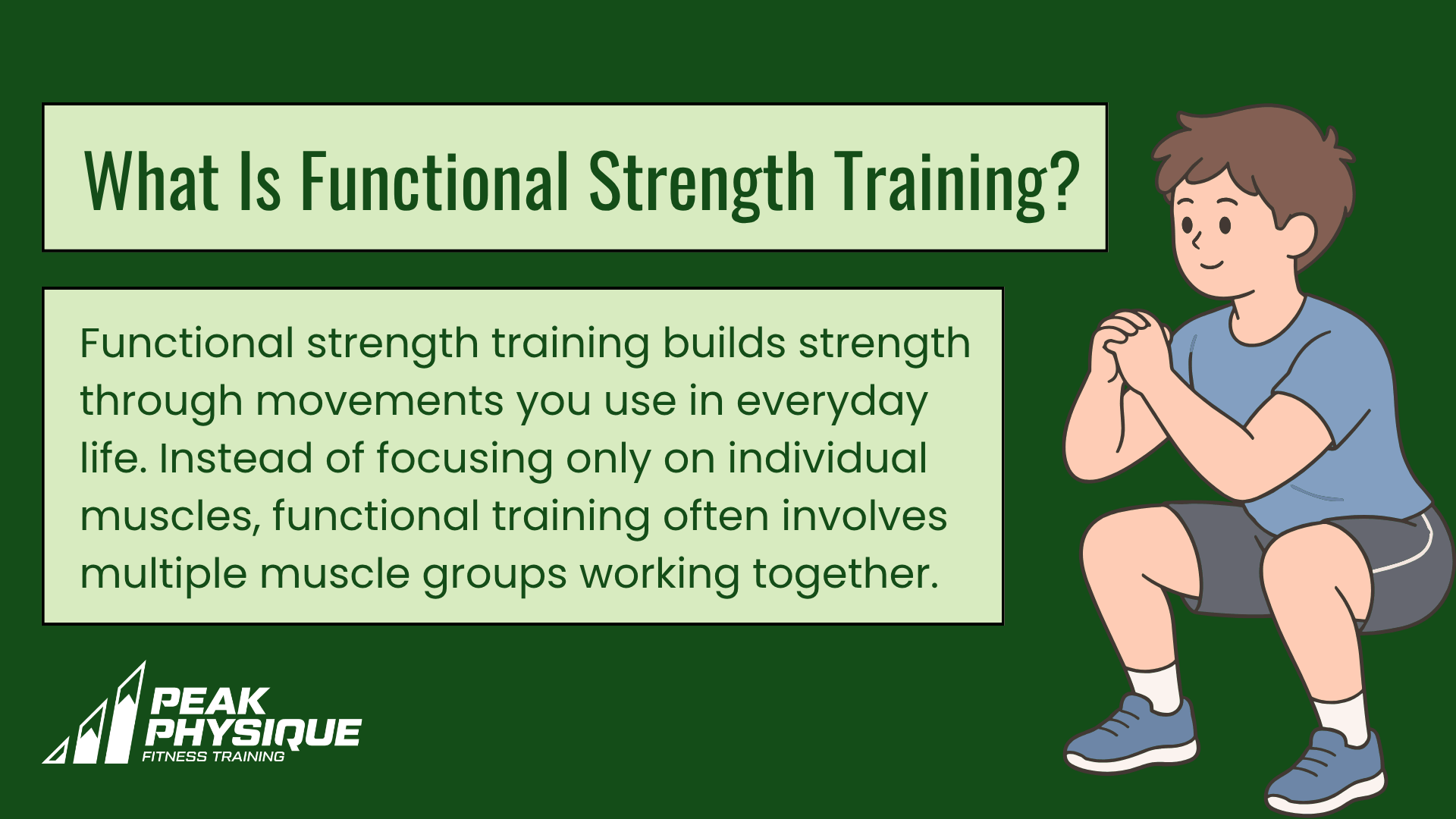
What Is Functional Strength Training?
Functional strength training builds strength through movements you use in everyday life. Instead of focusing only on individual muscles, functional training often involves multiple muscle groups working together.
Think about picking up a heavy laundry basket. You're not just using your arms. Your legs, hips, back, and core all work together to lift and carry it.
Functional strength training builds the strength, coordination, and stability you need for movements like these.
Most programs incorporate six foundational movement patterns:
Squatting: Lowering and raising your body, like sitting down and standing up.
Hinging: Bending at your hips to pick something up.
Pushing: Moving an object away from your body.
Pulling: Bringing an object toward your body.
Rotating: Turning your torso during everyday activities.
Carrying: Holding and transporting objects while maintaining control.
And here's something important: functional training doesn't mean every exercise needs to look exactly like something you do at home.
The goal is to strengthen the muscles and movement patterns that help you perform those activities.
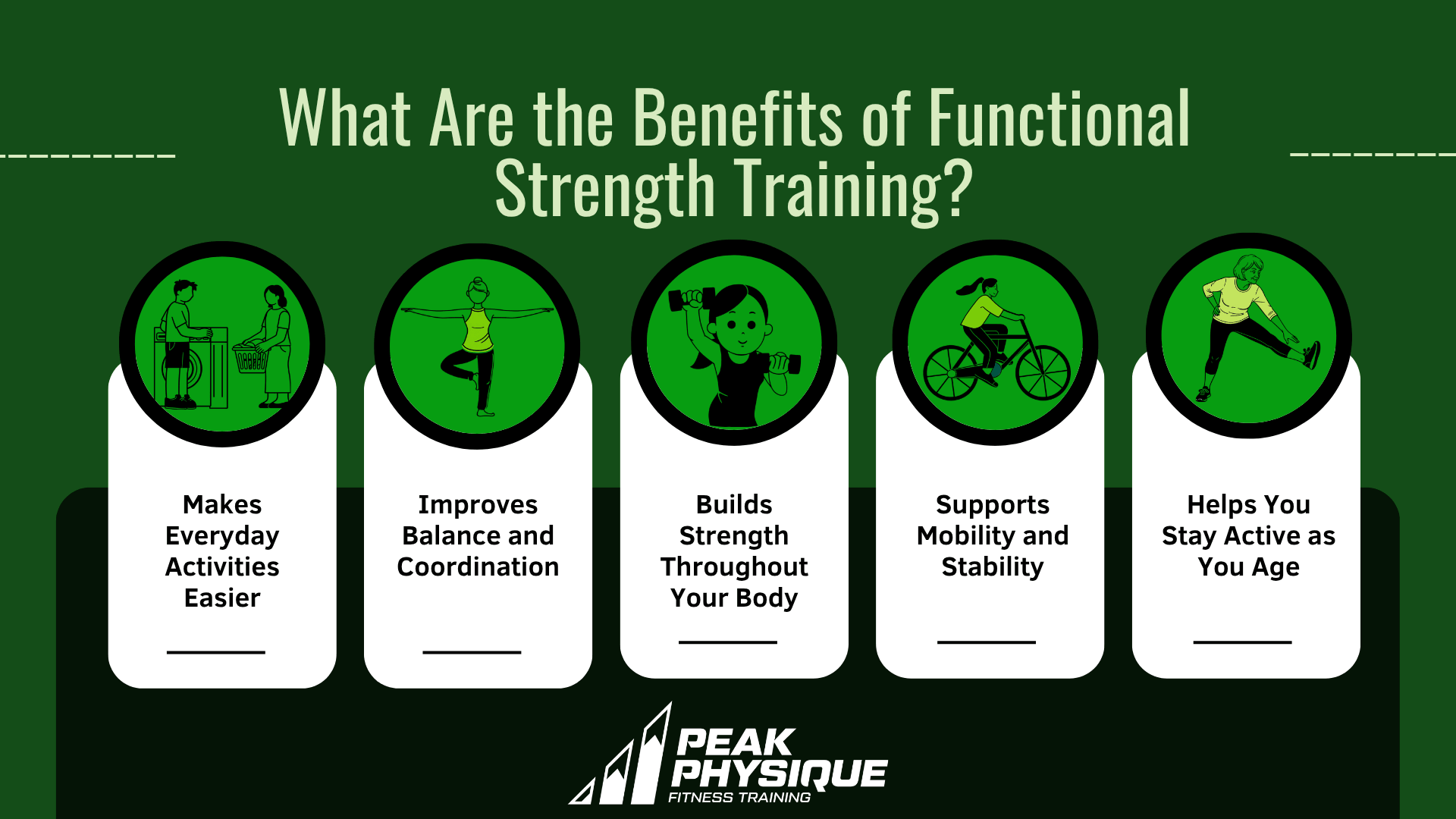
What Are the Benefits of Functional Strength Training?
Functional training can benefit almost anyone, regardless of age or fitness experience.
Makes Everyday Activities Easier
Carrying groceries, getting out of a chair, and climbing stairs all require strength.
Functional training builds the muscles and movement patterns used in these activities, which can make them feel easier over time.
Improves Balance and Coordination
Many functional exercises require several muscle groups to work together while you maintain your balance.
For example, lunges challenge your legs and core while helping you practice controlling your body as you step.
Better coordination and balance can make everyday movements feel more comfortable and controlled.
Builds Strength Throughout Your Body
Functional strength training often uses compound exercises, movements that involve multiple joints and muscle groups.
A squat, for example, works your quadriceps, glutes, and other muscles involved in stabilizing your body.
This allows you to strengthen several areas during one exercise.
Supports Mobility and Stability
Mobility is how you’re able to move through a range of motion, while stability is your ability to control that movement.
Functional exercises can help develop both. You need both to move comfortably, whether you're reaching overhead, bending down, or changing direction.
Helps You Stay Active as You Age
Maintaining strength and staying independent and mobile becomes increasingly important as we get older.
Functional training can help you continue performing everyday activities independently, from getting up off the floor to carrying household items.
The goal isn't just to be stronger today. It's to keep doing the things you enjoy for years to come.
8 Functional Strength Training Exercises for Everyday Life
You don't need complicated equipment or an advanced workout routine to get started.
Here are eight functional strength training exercises and how they connect to everyday movements.
1. Squats: Getting Up and Down
Everyday movement: Standing up from a chair, getting off the couch, or lowering yourself to pick something up.
Squats help you get up and down by strengthening your legs and glutes while challenging your core and balance.
How to do them:
Stand with your feet approximately shoulder-width apart.
Bend your knees and hips as if sitting back into a chair.
Lower yourself as far as you comfortably can while maintaining control.
Push through your feet to return to standing.
Beginner modification: Practice sitting down and standing up from a sturdy chair.

2. Deadlifts: Picking Things Up
Everyday movement: Lifting groceries, laundry baskets, or other objects from the floor.
Deadlifts strengthen your glutes, hamstrings, and back while teaching you to bend at your hips.
How to do them:
Stand with your feet hip-width apart and hold light dumbbells.
Keep your knees slightly bent while pushing your hips backward.
Lower the weights along your legs while keeping your back in a controlled, neutral position.
Push through your feet and bring your hips forward to stand.
Beginner modification: Practice the hip-hinge movement without weights.
3. Step-Ups: Climbing Stairs
Everyday movement: Walking upstairs, stepping onto a curb, or getting into a vehicle.
Step-ups build lower-body strength while challenging balance and coordination.
How to do them:
Stand in front of a low, sturdy step.
Place one foot completely on the step.
Push through that foot to lift yourself up.
Step back down slowly and repeat.
Beginner modification: Use a lower step and a stable handrail for support.
4. Farmer's Carries: Carrying Groceries
Everyday movement: Carrying shopping bags, suitcases, or other household items.
Farmer's carries strengthen your grip, arms, shoulders, and core while challenging your ability to stay upright.
How to do them:
Hold a dumbbell in each hand at your sides.
Stand tall with your shoulders relaxed.
Walk forward at a controlled pace.
Keep your body upright without leaning or swinging the weights.
Beginner modification: Start with lighter dumbbells and shorter distances.
5. Rows: Pulling Objects Toward You
Everyday movement: Opening a heavy door or pulling something toward your body.
Rows strengthen your back and arms while helping you develop controlled pulling movements.
How to do them:
Hold a dumbbell in one hand and support yourself with the other hand on a stable surface.
Hinge forward slightly at your hips.
Pull the dumbbell toward your hip.
Lower it slowly and repeat.
Beginner modification: Try a seated cable row or resistance band row.
6. Push-Ups: Building Pushing Strength
Everyday movement: Pushing open doors or moving objects away from you.
Push-ups strengthen your chest, shoulders, arms, and core.
How to do them:
Place your hands slightly wider than shoulder-width apart.
Keep your body aligned as you bend your elbows.
Lower your chest toward the surface.
Push back to your starting position.
Beginner modification: Perform push-ups against a wall or sturdy countertop.
7. Reverse Lunges: Getting Down and Back Up
Everyday movement: Lowering yourself toward the ground, kneeling, or stepping backward.
Reverse lunges strengthen your legs and glutes while challenging balance.
How to do them:
Stand with your feet hip-width apart.
Step one foot backward.
Bend both knees and lower your body as far as comfortable.
Push through your front foot to return to standing.
Beginner modification: Hold onto a stable surface for balance or reduce how far you lower.
8. Standing Rotations: Turning and Reaching
Everyday movement: Turning to reach something beside you or rotating your body during recreational activities.
Controlled rotational exercises help develop core strength and coordination.
How to do them:
Stand with your feet shoulder-width apart.
Hold a light resistance band secured to a stable anchor beside you.
Keep your hips relatively steady as you rotate your torso away from the anchor.
Return slowly and repeat on both sides.
Beginner modification: Practice gentle standing torso rotations without resistance.
Functional Strength Training vs. Traditional Strength Training: What's the Difference?
You might be wondering whether functional training beats traditional weightlifting. The truth is, both can help you build strength, and they often overlap.
Traditional strength training may focus on individual muscles or specific performance goals, while functional training emphasizes movements that support everyday activities.
Here's a simple comparison:
| Functional Strength Training | Traditional Strength Training |
|---|---|
| Emphasizes everyday movement patterns | May emphasize individual muscles or specific lifts |
| Often uses compound exercises | Uses both compound and isolation exercises |
| Focuses on strength, balance, and coordination | Focuses on goals like strength and muscle growth |
| Includes movements like carries and step-ups | Includes movements like bench presses and bicep curls |
You don't have to choose one. A well-rounded workout can incorporate both approaches depending on your goals.
How Often Should You Do Functional Strength Training?
For many adults, functional strength training at least twice a week is a reasonable starting point.
You might incorporate functional exercises into two or three full-body workouts, allowing time for recovery between challenging sessions.
However, your ideal schedule depends on your fitness level, goals, exercise intensity, and recovery.
If you're just getting started, focus on learning the movements before adding heavier resistance or more challenging variations. And remember, consistency matters more than making every workout difficult.
Build Strength for Everyday Life at Peak Physique in Troy, MI
Functional strength training is about more than what you can lift in the gym. It's about carrying groceries without struggling, feeling confident on the stairs, staying active with your family, and continuing to do the things you love.
At Peak Physique, our personal trainers create workouts around your goals, experience, and abilities. Whether you’re looking to improve balance, build strength, or simply make everyday movement easier, we're here to help.
Schedule today and get your first workout free with your consultation!
Frequently Asked Questions About Functional Strength Training
What’s an Example of Functional Strength Training?
Squats are a common example because they strengthen the muscles you use to sit down and stand up. Other examples include step-ups, deadlifts, rows, and farmer's carries.
Can Functional Strength Training Build Muscle?
Yes! Functional strength training exercises can build muscle when they provide enough resistance and become progressively more challenging over time.
Do You Need Weights for Functional Strength Training?
No. Many functional exercises use your body weight. You can add resistance as you progress with dumbbells, kettlebells, resistance bands, and other equipment.
Is Functional Training Good for Older Adults?
Yes. Functional training can help older adults maintain strength, balance, mobility, and confidence with everyday activities. Exercises should be adapted to individual abilities and health considerations.
Can You Combine Strength and Functional Training?
Absolutely! Strength and functional training work well together. A personalized program can include traditional weightlifting alongside exercises that emphasize balance, coordination, and everyday movement.